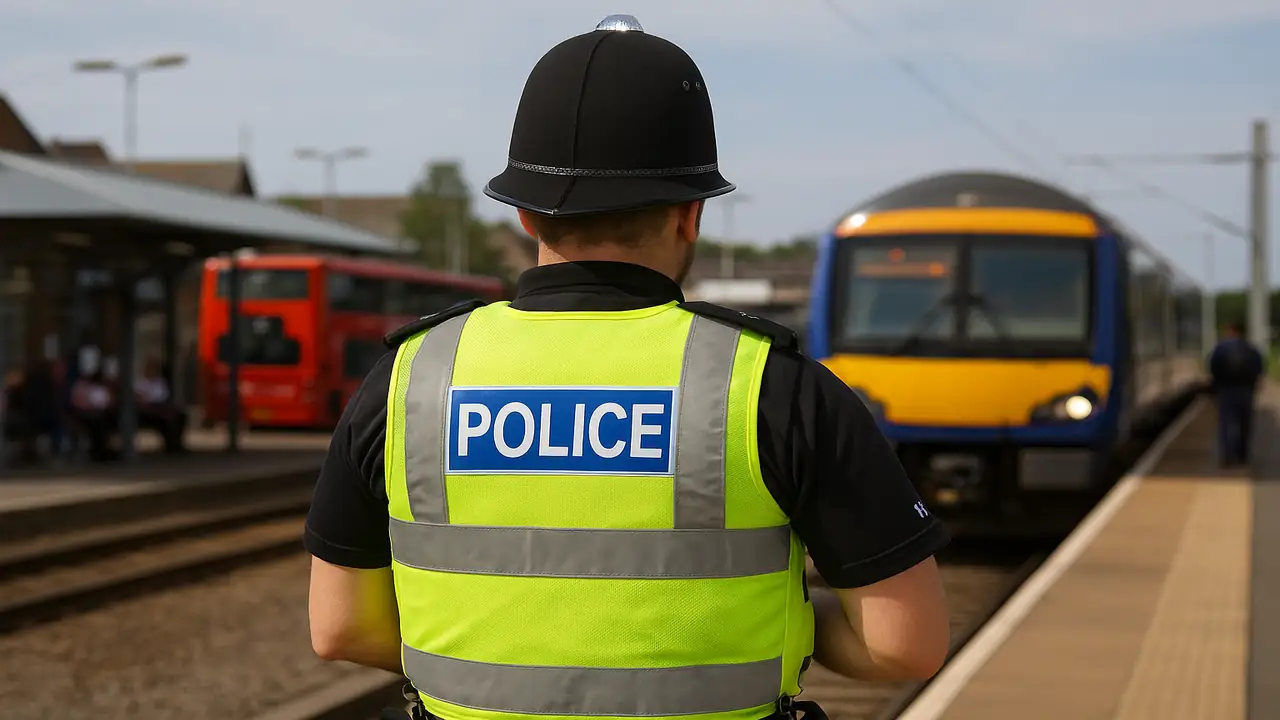
For analysts working within the BSC Policing Network, port towns represent one of the most complex security environments in modern Britain. Here, public transport is not just infrastructure. It is a moving security zone. Train platforms, bus interchanges, access roads to docks and logistics hubs form the real control grid of the city. Economic flows, temporary workers, tourists, freight drivers and criminal couriers all pass through the same narrow corridors. Felixstowe illustrates this model clearly, but the pressures it faces are shared by many coastal transport hubs across the UK.
Why Transport Is the Real Security Backbone in Port Towns
In large cities, policing follows neighbourhoods. In port towns, it follows movement. Control is built around routes, timetables and transfer points rather than residential blocks.
Passenger schedules define when crowds gather. Dock shift changes define when transport overload occurs. Seasonal logistics contracts define when population density spikes suddenly. As a result, transport infrastructure becomes the primary predictor of short-term disorder and opportunistic crime.
UK transport policing statistics show that more than 40% of public order incidents in coastal service towns occur within 300 metres of transport nodes. These include:
- Main bus terminals
- Railway platforms
- Cargo access roads
- Taxi interchange zones
This is not tourism-driven volatility. It is employment-driven mobility linked directly to freight operations.
Felixstowe-Type Cities as High-Risk Logistic Environments
Felixstowe handles over 4 million containers annually and accounts for roughly 40% of the UK’s containerised imports. This freight dominance reshapes the local security environment in three critical ways.
First, temporary labour flows. Dockworkers, drivers, warehouse contractors and seasonal port staff rotate continuously. High turnover weakens informal community oversight and reduces long-term accountability.
Second, compressed time density. Passenger pressure is not spread evenly across the day. It peaks sharply around vessel unloading windows and freight dispatch periods. These peaks produce momentary overloads in transport systems designed for steady commuter patterns.
Third, mixed-risk routing. The same bus routes carry school passengers, shift workers, tourists and night-shift logistics personnel. Policing models built for standard commuter systems struggle to filter this mixed risk profile effectively.
Suffolk Constabulary reporting from 2019 to 2024 shows transport-adjacent offences increasing by approximately 17%, with the rise concentrated in theft, alcohol-linked assault and drug courier activity using short-distance transport corridors.
How Police Monitor Passenger Flows Without Direct Network Control
Police do not operate buses, trains or dock gates. Their leverage over transport is indirect and data-driven.
Modern port-town monitoring relies on:
- CCTV operated by private transport firms
- Ticketing and access control systems
- Platform and vehicle staff incident reporting
- Local authority surveillance networks
- British Transport Police coordination for rail
The central weakness is fragmentation. Unlike metropolitan regions, port towns rarely operate integrated command systems that combine all data streams in real time. Information is consolidated after incidents rather than during them.
Average response time to transport-related disturbances in smaller coastal towns ranges between 8 and 12 minutes. During late-night shift transfers or vessel discharge peaks, this gap is large enough for both spontaneous violence and courier movements to disperse before interception.
Common efficiency failures include:
- Incompatible camera systems between operators
- Delayed access to privately held footage
- Limited enforcement authority for contracted security
- Jurisdictional uncertainty across multiple sites
Public Transport as a Crime Multiplier
Transport does not create crime, but it amplifies certain forms by providing anonymity, predictable congestion and rapid exit routes.
The most persistent categories observed in UK port towns include:
- Opportunistic theft during boarding and disembarking
- Drug courier movement via short-distance bus links
- Alcohol-linked night-time violence around late services
- Serial shoplifting enabled by multi-district transit
These patterns have been recorded not only in Felixstowe but also in Dover, Grimsby and parts of Hull. The mechanism is identical: predictable transport density combined with limited late-hour coverage.
Where Policing Systems Break Down in Small Port Networks
The key weakness is not simply manpower. It is coordination failure.
Port transport policing operates across three disconnected layers:
- National infrastructure security (ports, rail)
- Territorial police forces
- Private transport security contractors
They function under different command chains, data access rules and accountability structures. This produces repeated breakdowns:
- Delayed footage release from private operators
- Confusion during multi-location incidents
- Restricted escalation powers for transport guards
- Weak continuity between rotating patrol teams
The result is a system that responds efficiently to major events but struggles against repeated low-level crime that gradually erodes public confidence.
Open Transport Data and Predictable Movement Risk
Public access to timetables and routes is essential for economic function. It is also an analytical asset for both policing and criminal planning.
Law enforcement units increasingly use transport flow data to:
- Forecast peak disorder windows
- Align patrol deployment with freight-linked mobility
- Identify repeat offence corridors
Offenders use the same data to time movement patterns. The imbalance lies not in information access, but in response speed and coverage depth.
Comparative Risk Profile of UK Transport Systems
City type: Major metropolitan
Main pressure: Commuter saturation
Dominant risk: Crowd theft, disorder
Police coverage density: High
City type: Regional hub
Main pressure: Intercity transfers
Dominant risk: Ticket fraud, theft
Police coverage density: Medium
City type: Port town
Main pressure: Freight-linked mobility
Dominant risk: Courier crime, alcohol violence
Police coverage density: Low–Medium
Port towns consistently show the widest discrepancy between instantaneous passenger load and policing density.
Long-Term Trends Reshaping Transport Policing in Coastal Cities
Digital ticketing systems have reduced cash-based crime, but increased misuse of identity-linked passes. Private security outsourcing has lowered municipal costs but fragmented enforcement authority. Freight volumes continue to rise faster than local policing budgets. Night-shift logistics employment keeps expanding, putting permanent pressure on late-hour transport safety.
These shifts widen the gap between infrastructure growth and real enforcement capacity.
What This Means for Felixstowe-Type Cities Across the UK
Felixstowe is not an exception. It represents an advanced stage of a transport-security model that is spreading across coastal Britain.
Port towns carry national economic importance through logistics while being policed with local-level capacity. Every expansion of transport throughput increases public order complexity without providing matching integration of security systems.
Effective adaptation requires:
- Patrol deployment aligned with freight schedules
- Unified data-sharing frameworks with operators
- Reinforced late-night route coverage
- Proactive rather than reactive transport policing
Without this adjustment, transport will remain both the primary economic asset and the most exposed security vulnerability of port towns.
Leave a Reply